

The culture sees independence as maturity, but for us that’s not good enough. Interdependence is maturity.
The culture sees independence as maturity, but for us that’s not good enough. Interdependence is maturity.

What are the good things social media can bring to a pastor’s life?

What happens to a pastor’s soul when we consume social media?

I’ve just watched a small team have a bit of a wobble. They didn’t crash – the event they planned went smoothly in the end, and no-one outside the team would have spotted that there was a problem. But there was, and it’s easily solved.

I keep a list of preachers I run through as I am preparing a sermon. Particular preachers have gifts and emphases I want to learn to copy, and I find it really helpful having a physical document to print off, where I can force myself to see whether or not I have addressed each critical issue. The

If our church took the approach of simply transporting a student-church model for training and equipping, we wouldn’t begin to resource our people.

Chip and Dan Heath tell a story of the computer chip company, Intel. Back in the 1970s Intel was well-known for making computer memory – at one point they had a near monopoly – but they were being increasingly challenged by high-quality overseas competition. At the same time, a small team inside Intel was working

In every leadership task there’s an easy part and a hard part – and they just keep on coming

Another sailing cliché that you can mull on as you still enjoy the remnants of that holiday glow.
How can you tell if you’re positioned to get the best possible amount of energy from the wind, to get where you want to go?
You listen, and you look. Because – ‘a flappy sail is not a happy sail.’

Learning to sail was a deliberate exercise in getting out of my comfort zone. Way out. I say ‘learning to sail,’ meaning ‘starting to learn to sail’. Meaning, ‘learning how to capsize with good grace.’ Mostly. And get quite bruised in the process.

Our politicians have just refused to speak for 48hrs, and deprived themselves and us of leadership. We preachers can and must do better.
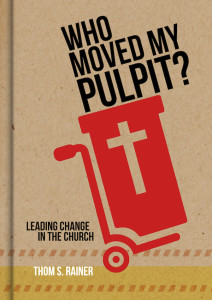
Yup, I have ten copies of Thom Rainer’s new book ‘Who moved my pulpit?’ to give away (thanks, Thom!).
All you have to be in with a chance is to subscribe to my email list!
From June 1st I’m going to be running a giveaway for copies of Thom Rainer’s new book, ‘Who Moved My Pulpit? Leading Change in the Church’. Stay tuned for more details! You can download a sample chapter from this post.

There is a stubbornness in the way the Bible refuses to glamorise the Christian life. We shall never escape the reality of conforming to Jesus’ death, until we ourselves die.

One weakness in much preaching today is that it is quite individually applied, and in a way that can be transplanted from one church to another without too much difficulty. It is not focussed enough on a particular congregation, and therefore lacks the force to move that church to better obedience.

In Paul’s mind the potential elder must show a double gifting from Romans 12: an ability to teach must be partnered to an ability to lead.

Churches, like any human organisation, cannot operate long-term as shapeless, improvised groupings. And even though an occasional New Testament scholar will suggest that the first few decades of the church had an exciting, free-form style, which only much later hardened into a hierarchy, when we turn to the New Testament, we can see that the experience of the very first Christians was much more complex.

Do you have a passion to see the lost found, and the found built up? Do you have a desire to see the gospel understood, churches planted, men and women converted, children growing in their faith, and for you to be playing a part in that for the rest of your life? Do you treasure your time in God’s Word, and love to see it opened among his people so they are dazzled by his wonder? Then you’ve identified what he means to aspire and desire this noble task.

What is the alternative to self-centred, rebellious ambition? Is there a way of rewriting ambition, so that it can appear in a God-centred, passionate, obedient way?

That’s what Diotrephes heard – that he would be first, that he would be like God. That he would rule the church, that he would be its saviour, that he would be its sole source of truth, that he would be the exclusive centre of its relationships, and that he would be worshipped.
 ministrynutsandbolts.com